Outstanding customer service for us as an managed IT support and IT services provider is our top priority – more than 99% of our customers rate our service as “great”.


Tacked this on to another request while we were on the phone and Anthony was able to take care of it right away. Much appreciated!

Chiara C
The team is always so helpful and responsive! They are the best IT team, as an managed IT services provider I have ever worked with.

VM
How We Help Bay Area Businesses Operate Efficiently and Minimize Security Risks
Our Range of IT Services Includes...

TotalCare IT Support
Verus' premiere offering, as an IT Support & Managed IT Services Provider, provides everything needed to support the day-to-day operations of your technology for a low, fixed monthly price. This ensures that all your technology needs are met efficiently and effectively.

Custom Software Development
Often the information needs of a business can't be met with off-the-shelf software. We develop and support custom data solutions to meet your business' specific needs, including desktop, web, and mobile technologies.

Verus Cybersecurity
There is no silver bullet to guarantee an effective security posture, nor a single defensive mechanism that can ensure security across modern networks. In order to defend against today's threats, we take a layered approach to cybersecurity.
We're Here To Set The Record Straight...
Having The Right IT Support Partner Can Change Everything
Verus Technology Solutions
Verus Technology Solutions was founded in 2001 to provide top-to-bottom IT services to businesses in and around San Francisco. We see so much innovation in the Bay Area on a daily basis, and we believe IT failures should never hold a company back from changing the world.
We didn't break into the tech world to pinch pennies from clients. We go into every partnership to help their business scale gracefully. Your company growth is our company growth, always.

Here is How We Do It:

Exceptional Customer Service
IT issues happen – and reaching out to your support provider shouldn’t feel like pulling teeth. When you call us for help, we respond within minutes and act like part of your in-house team.

Comprehensive IT Coverage
Every company is unique with different challenges, goals, and opportunities. Our IT support model is designed to get to the root of what makes you special – and develop a plan that fits like a glove.

Proactive Support Model
We don’t wait for disaster to strike before we step in. Our team monitors your IT infrastructure 24/7 to manage risks before they spiral out of control.

Mystery-Free Pricing
No one likes unwelcome surprises on their bills. When you work with us, you pay a flat, agreed-upon monthly rate.
With the proper level of IT services and support, there's literally nothing your business can't accomplish. That's exactly what we want for you and, at the end of the day, that's what our IT consulting and managed services are all about.
Getting started is easy. Give us a call at (415) 941-0468 or complete the form, and we will get in touch with you to set up an introductory phone call.
What Happens Next?

Fill in our quick form

We’ll schedule an introductory phone call

We’ll take the time to listen and plan the next steps
What Makes Verus Technology
Solutions Different?
We Take a Personal Approach to IT Support

Clients Love Us
Being a managed IT support and IT services provider, customer support is our top priority. We do what we say that we are going to do while maintaining fair, transparent pricing. We even have over 99% "great" ratings with our customers.

The IT Risk Assessment
We utilize a proprietary, constantly evolving checklist to ensure that all client systems are as stable and consistent as they can be.

Transparent Billing
All items are meticulously
detailed, ensuring complete transparency
and clarity about what you are paying for.

Communication
As a Managed IT Services Provider we believe that client satisfaction and communication are key. Quarterly business reviews and client satisfaction meetings ensure services are meeting expectations.

Availability
Our team is well equipped to support your IT environment remotely. Local resources are available for site visits for any issues that require hands-on support.

TotalCare is Everything You Need "Day to Day"
Some other providers don't include things like new PC deployments and system upgrades.

No Long Term Contracts
You shouldn't be locked into a provider of any kind. Many of our clients have worked with us for more than 10 years - we prove ourselves with our IT support and customer service, each and every month.

No Onboarding Fees
It doesn't cost anything to give our service a try. We strive to make the process as seamless and non-disruptive as possible.

99% CSAT Score
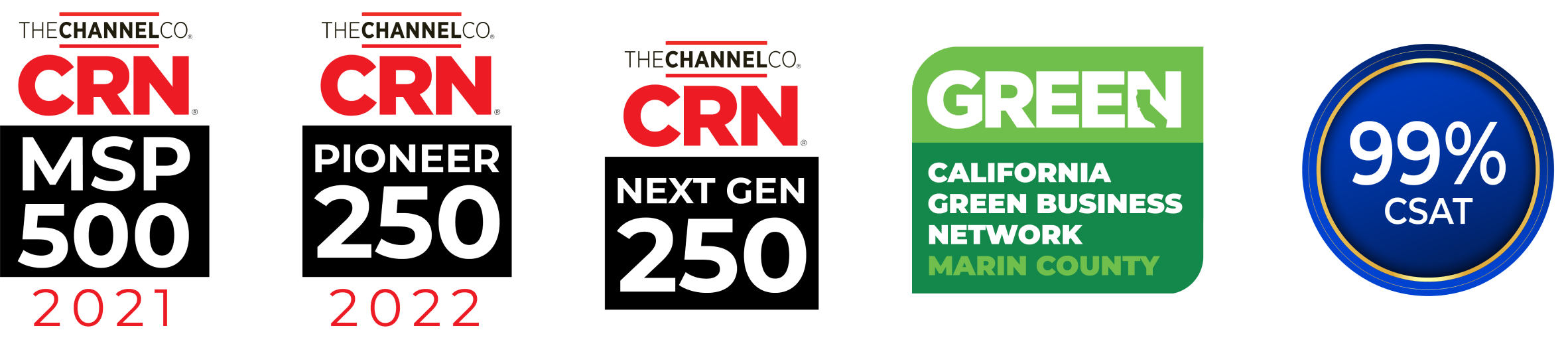
Proudly boasting a 99% Customer Satisfaction (CSAT) Score, we deliver exceptional Managed Services with unmatched reliability and expertise.
See What Our Clients are Saying
“Tacked this on to another request while we were on the phone and Anthony was able to take care of it right away. Much appreciated!”
Chiara C
“Verus just navigated our office through a change in email service which could have slammed our productivity, but they avoided that and we continue uninterrupted operation!”

DR
“The team is always so helpful and responsive! They are the best IT team, as an managed IT services provider I have ever worked with.”
VM
Avoid the Headache of Managing Your IT Internally
Managed IT
With our managed IT services offering, we plug our complete IT department program into your businesses to take IT completely off of your plate.
We've designed our managed services offerings to give businesses like yours the benefits of having your own in-house IT department - at a fraction of the cost and with none of the headaches that normally come with it. All of your routine IT tasks - from new employee onboarding to help desk support to vendor management, backups and disaster recovery - are all provided with a fixed, predictable monthly cost.


IT Projects
Need help with an upcoming project? Let’s work together to get it done on time and on budget.
We understand you need dependable support you can turn to - not someone who you have difficulty even getting on the phone.
We offer a wide range of project and consulting services for you to choose from, whether you're looking for a major infrastructure upgrade, strategic IT planning or something far smaller in scale, we've got the experience and expertise to help.
TotalCare IT Support includes:
The Verus Technology IT Support Help Desk
Cybersecurity
Desktop and Server Management
Backup and Disaster Recovery
Procurement and Vendor Management
CTO and Strategic IT Consulting
Work-from-Home IT Support

Enroll in Our Email Course
Learn How a Security-First IT Strategy Benefits Your Company
Keeping your IT ahead of the curve is a full-time job (and then some). That’s why we make it a point to educate businesses on the principles of IT before they make a big decision. We’ve crafted an email course to explain:
The rundown of IT pricing, and which plans to consider.
What a contemporary IT security plan involves.
How IT can increase productivity, help you automate certain tasks, and most importantly, reduce your overhead.

FAQs
What happens when hardware fails or when new software needs to be installed?
Periodic hardware failures and new or updated software are common. Although not considered maintenance, we include handling these situations alongside general maintenance, and they are included in our services.
Can my employees reach out for support directly, or just me?
We designed our program to make it easy to delegate all IT related issues to our support team. We encourage all staff to report issues directly to us, so we can keep track of what is going on and resolve issues faster. With our flat-rate monthly pricing, there is no risk of surprises and additional fees.
What kind of industries best benefit from our IT support services?
Verus customers come from all industries. We work best with businesses who understand that their IT is only as good as the strategy that is driving it and those who value relationships and a true partnership approach. If your business aligns with this and you’re looking for opportunities to help your IT infrastructure operate in the most efficient way possible, then you’re a great fit for us.
Are IT services only for big corporations?
Not at all. We understand that securing your network is more important now than ever, no matter the size of your business. Verus provides all-inclusive managed IT services for small to medium sized businesses to build a customized technology plan to keep you running efficiently and to strategically limit your risk and exceed your compliance requirements.
Is there a minimum number of users you support?
Verus supports small to medium-sized businesses with a minimum of 5 technology users.
With the proper level of IT support and IT services, there's literally nothing your business can't accomplish. That's exactly what we want for you and, at the end of the day, that's what our IT consulting and managed IT services are all about.
Getting started is easy. Give us a call at (415) 941-0468 or complete the form below, and we will get in touch with you to set up an introductory phone call.
How Can We Help?
Fill in our quick form
We'll take the time to listen and understand your situation
If we're a good fit to help, we'll let you know the general costs and next steps

San Rafael, Office
1717 Fifth Avenue
San Rafael, CA 94901

Existing Customers

Sales Inquiries

Email: